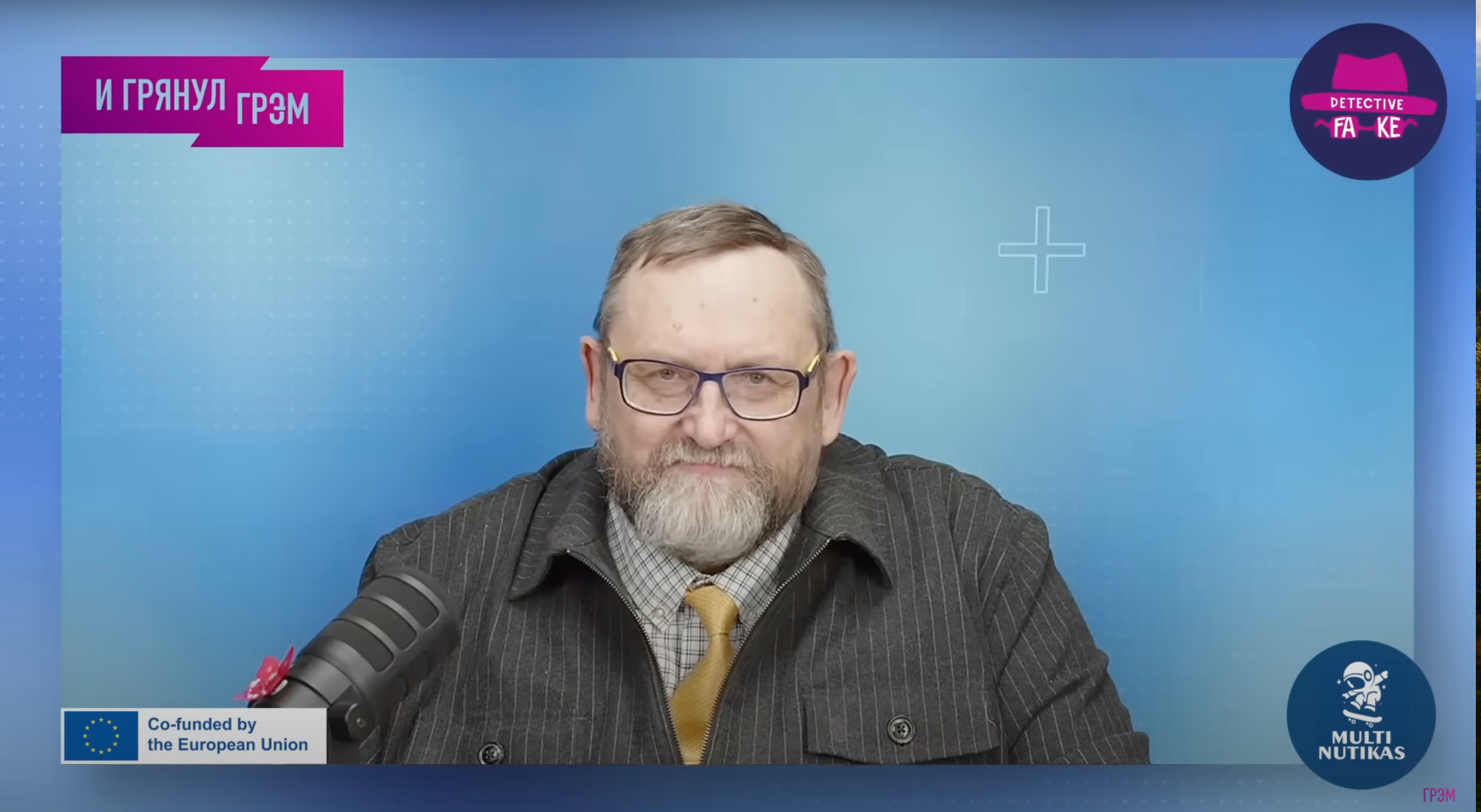
Critical Thinking in Media: Masterclass by Science Journalist Konstantin Ranks
In this FakeDetective masterclass, researcher and science communicator Ranks explains why conspiracy theories and complex fakes (such as climate change denial) are so convincing and how to talk to people who strongly believe in them without causing conflict.
The video focuses on how to conduct a constructive dialogue: why ridicule, pressure, and appeals to abstract authority do not work; how emotions, fear, and mistrust shape belief in conspiracy narratives; and why it is important to look for common ground instead of confrontation. Using real-life examples, the speaker shows how to gently guide a conversation, ask the right questions, and help a person begin to reflect and doubt misinformation on their own.
Special attention is given to the role of science, data, and critical thinking, as well as to practical communication strategies that can be used when discussing sensitive topics related to fake news, propaganda, and misinformation. The masterclass highlights that changing beliefs is a gradual process that requires patience, empathy, and respect.
This video is especially useful for teachers and youth workers leading discussions or workshops on critical thinking, media literacy, and fake news, and it is also valuable for young people who want to better understand how misinformation works and how to engage in difficult conversations responsibly.
Co-funded by the European Union. Views and opinions expressed are however those of the author(s) only and do not necessarily reflect those of the European Union, European Commission or The National Agency (Agency for International Programs for Youth). Neither European Union nor the granting authoiry can be held responsible for them.