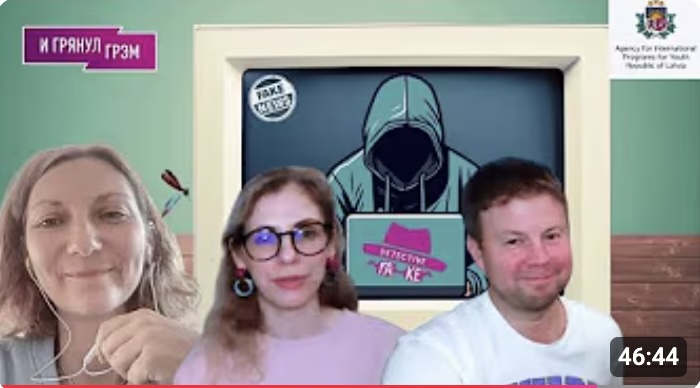
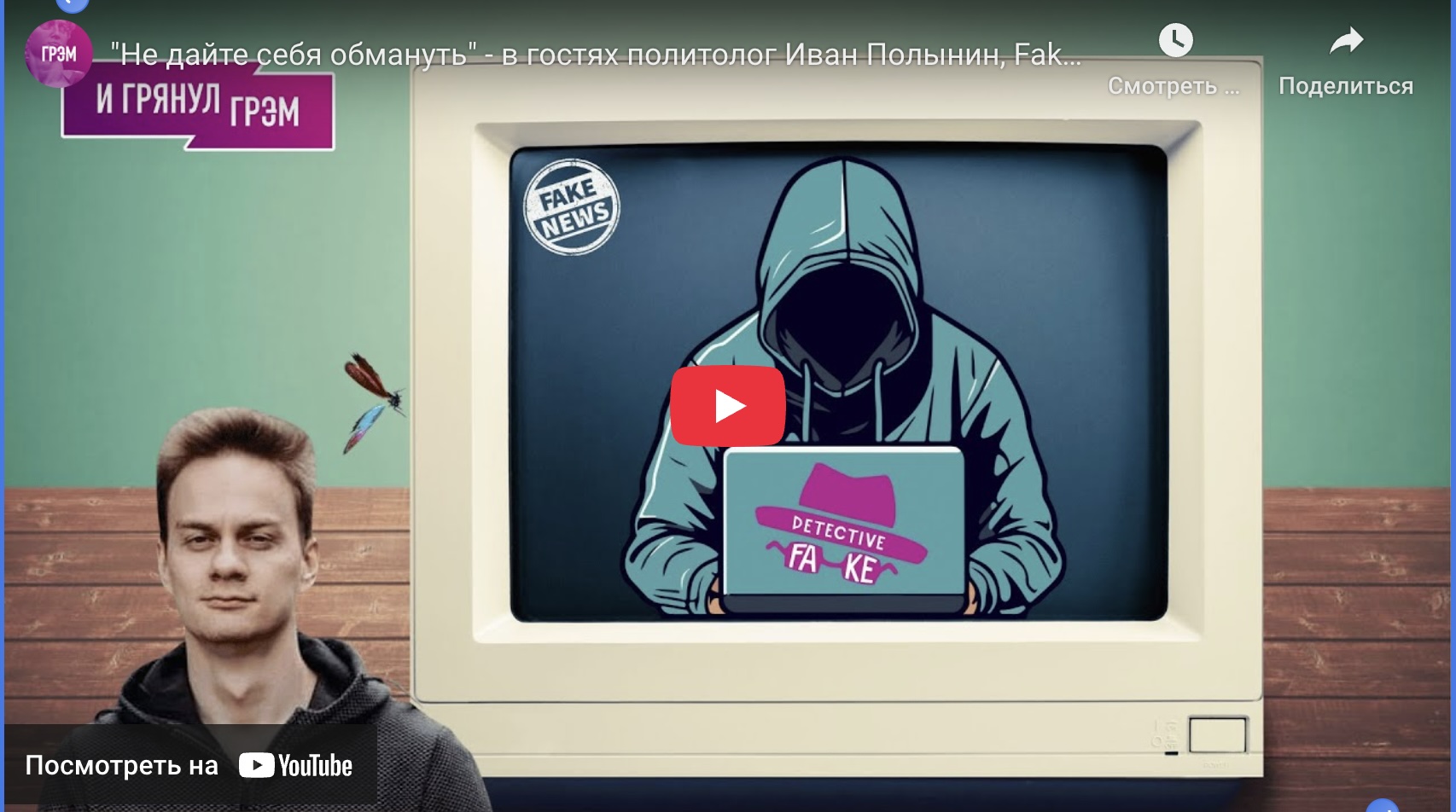
"Don’t Let Yourself Be Deceived" — featuring political scientist Ivan Polynin. FakeDetective, Part 6
In this episode of FakeDetective, political scientist and lecturer at Tallinn University, Ivan Polynin, discusses how fake news and disinformation spread in the digital environment and why people often engage with misleading content even when it seems obviously false.
The conversation explores the role of emotions, social media algorithms, comments, and bots in amplifying fake content, as well as how discussion itself can unintentionally contribute to its spread. Ivan explains how disinformation campaigns exploit existing social tensions, polarizing topics, and information overload to create confusion, distrust, and emotional reactions.
Special attention is given to media habits of young people, short-form content, and how propaganda adapts its format to fit modern platforms such as social media, short videos, and influencer culture. The video also discusses the importance of trusted media, reputation, accountability, and active reading as key tools for navigating today’s information space.
The episode provides practical guidance on how to approach news critically: asking what kind of content it is, what purpose it serves, and how it can be verified using multiple reliable sources.
This video can be used by teachers and youth workers during lessons and discussions on media literacy, critical thinking, and disinformation, and is also useful for young people who want to better understand how fake news works and how to engage with information more responsibly.
Co-funded by the European Union. Views and opinions expressed are however those of the author(s) only and do not necessarily reflect those of the European Union, European Commission or The National Agency (Agency for International Programs for Youth). Neither European Union nor the granting authoiry can be held responsible for them.